San Antonio Airport Terminal
Led a team of seven engineers through the full project lifecycle for a 925,000 sq ft terminal redevelopment, coordinating across architecture, construction, and consulting teams to transform San Antonio's airport into a modern, high-capacity hub.
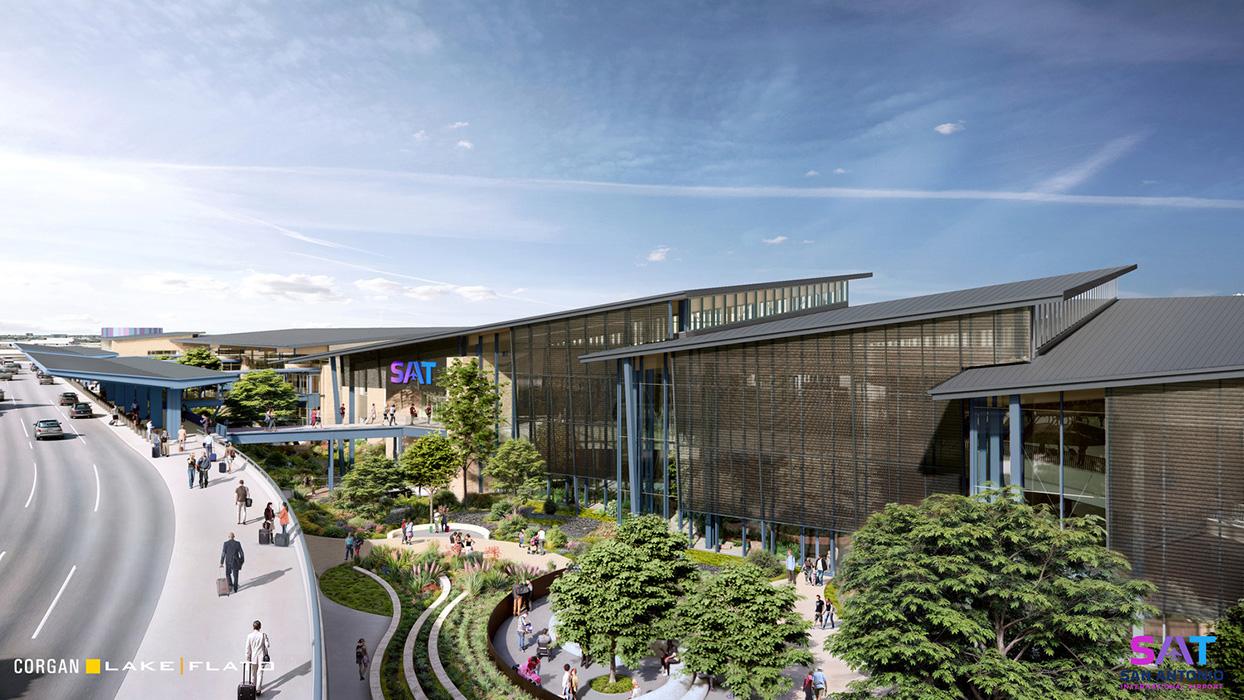
Image courtesy of Thornton Tomasetti
Overview
The San Antonio International Airport Terminal Redevelopment is a transformative initiative to create a modern, high-capacity hub for one of Texas's fastest-growing cities. The 925,000 sq ft project seamlessly integrates Terminal A with Terminal B and adds 18 new gates, dramatically expanding capacity while enhancing the passenger experience.
The facility features advanced landside ticketing, enhanced security screening, spacious holdrooms, and a state-of-the-art immigration facility. The ticketing area and Great Hall showcase a mass timber roof deck with beams and trusses, supported by elegant steel Y-columns that allow natural light through clerestory windows.
My Role
- Led and mentored a team of seven engineers, setting priorities, balancing workloads, and providing targeted technical and professional development through one-on-one and group guidance.
- Coordinated with architects, contractors, and consultants through regular meetings to integrate structural requirements with architectural and construction needs.
- Led stand-up meetings and retrospectives to coordinate priorities, resolve issues, and refine team workflows to improve collaboration and overall efficiency.
- Oversaw BIM modeling efforts, managing an experienced BIM modeler while training and mentoring junior engineers in Revit workflows and firmwide standards to ensure accurate, coordinated deliverables.
Key Outcomes
- Successfully delivered structural design packages from schematic design through construction documents for the full 925,000 sq ft terminal.
- Addressed the site's expansive soils by implementing a framed ground-floor slab over a crawl space, allowing soil movement without impacting structural serviceability.
- Established efficient team workflows using agile-inspired practices (standups, retrospectives) that improved coordination and reduced rework.
- Mentored junior engineers who advanced their BIM proficiency and contributed independently to deliverables.